


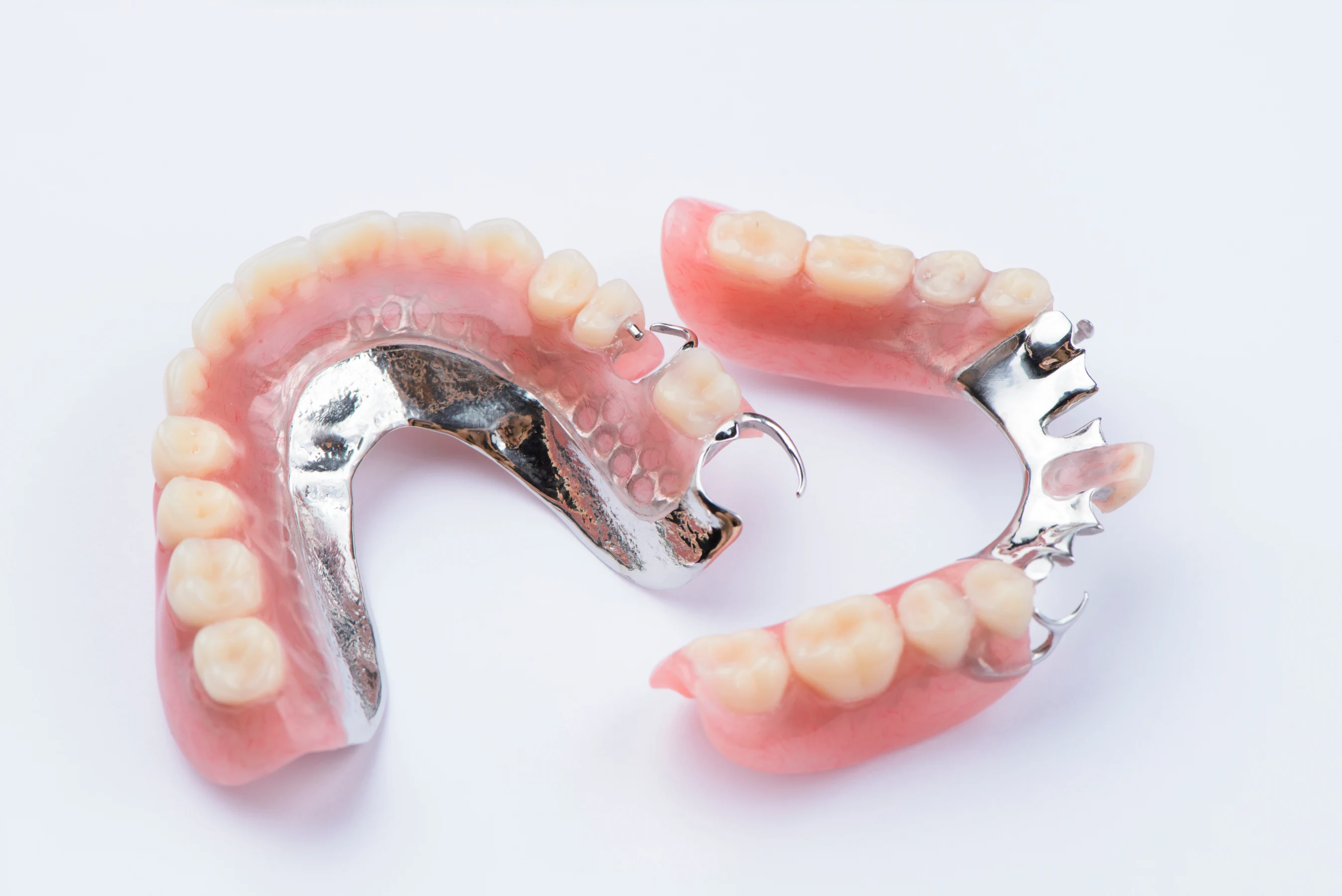
Flipper Dentures & Removable Partials in Raleigh, NC
Missing one or several teeth can affect much more than your smile. A visible gap may make you self-conscious, while missing back teeth can make eating more difficult. If you're waiting for your mouth to heal after an extraction or aren't ready for a fixed restoration, a removable tooth replacement may provide a practical solution.
At NewStart Denture + Implant Partners, we provide flipper dentures and removable partials in Raleigh, NC, with treatment planned around your appearance, comfort, oral health, function, and long-term goals.
Dr. Mark Scurria and Dr. Bruce Gray each bring more than 35 years of experience to prosthodontic care. Whether you need to temporarily replace a front tooth or are considering a removable solution for several missing teeth, we'll help you understand what each option can—and cannot—do.
Stop Suffering. Time for a NewStart.
Call (919) 850-5885 to schedule a consultation at our Raleigh office.
What Are Flipper Dentures and Removable Partials?
Flipper dentures and removable partial dentures replace missing teeth while allowing you to take the appliance out of your mouth for cleaning.
A flipper denture, sometimes called a flipper tooth or temporary partial denture, is typically a relatively simple removable appliance used to replace one or a few missing teeth. It is often chosen as an interim solution, particularly while an extraction site heals or while a patient considers longer-term treatment.
A removable partial denture replaces some—but not all—of the teeth in an upper or lower arch. Depending on its design, it can replace several missing teeth in different areas with a single appliance and may be intended for longer-term use.
Both fall within the broader range of denture solutions available at NewStart. Which option makes sense depends on the number and location of your missing teeth, the health of the remaining teeth, your bite, oral tissues, treatment timeline, and personal priorities.
When Might You Need a Flipper Tooth or Removable Partial?
There are many reasons someone may need removable tooth replacement. Some patients arrive after unexpectedly losing a tooth. Others know an extraction is coming and don't want to be left with a visible space afterward.
Common situations include:
- One missing front tooth
- Several missing teeth
- A planned tooth extraction
- Healing before longer-term restorative treatment
- Replacing an old or damaged partial
- Wanting a removable alternative to fixed treatment
- Seeking a temporary cosmetic solution
- Delaying a more extensive treatment for medical, financial, or personal reasons
The important question isn't simply whether a missing tooth can be replaced with a flipper. It's whether a flipper or another removable partial is appropriate for your particular situation.
What Is a Flipper Denture?
A flipper denture is a removable dental prosthesis that commonly replaces one or a small number of missing teeth.
The appliance typically includes artificial teeth attached to a gum-colored base. Depending on its design and the anatomy of your mouth, it adapts around existing teeth and oral tissues to remain in position.
Flippers are especially useful when appearance matters immediately but definitive treatment is not yet appropriate. For example, someone losing a visible front tooth may use a flipper during healing rather than going without a tooth.
What Does a Flipper Tooth Look Like?
A flipper is designed so the replacement tooth resembles the surrounding natural teeth as closely as practical. The base is generally made to blend with the appearance of the gum tissues.
Several factors influence the final appearance, including:
- Location of the missing tooth
- Number of teeth being replaced
- Tooth shade
- Tooth shape and size
- Smile line
- Available space
- Condition and position of neighboring teeth
- Design of the appliance
A flipper is still a removable prosthesis, so it should not be expected to look, feel, or function exactly like a natural tooth in every circumstance.
How Does a Flipper Stay in Place?
Flipper retention depends on its design, the surrounding teeth, and the shape of the mouth.
Because it is removable, a flipper generally doesn't provide the same stability as a fixed bridge or an implant-supported restoration. Some movement may occur, particularly during chewing.
That distinction is important when deciding whether a flipper is best used as a temporary solution or whether another type of restoration better matches your long-term expectations.
What Is a Removable Partial Denture?
A removable partial denture replaces missing teeth when some healthy natural teeth remain.
Unlike a full denture, which replaces an entire arch of teeth, a partial is designed around the patient's remaining dentition. Depending on the case, one appliance can replace teeth in more than one area of the mouth.
Removable partials may vary considerably in materials and design. The right approach depends on factors such as the location of missing teeth, condition of the remaining teeth, bite, available support, appearance goals, and how the appliance is expected to function.
Patients considering a longer-term removable solution can also learn about our broader partial denture options.
Benefits of Flipper Dentures
When used for an appropriate situation, a flipper can offer several advantages.
Replace a Visible Missing Tooth
One of the most common reasons patients consider flippers is appearance. A flipper can fill an obvious gap so you don't necessarily have to spend a healing or treatment-planning period without a visible tooth.
Provide an Interim Solution
A flipper can provide temporary tooth replacement while the mouth heals or while you and your providers determine the next stage of treatment.
Removable for Cleaning
The appliance can be removed, allowing both the prosthesis and your natural teeth to be cleaned.
Avoid Committing Immediately to More Extensive Treatment
Some patients aren't ready for a fixed bridge or implant-related treatment. A flipper may provide an interim option while longer-term decisions are being made.
Benefits of Removable Partial Dentures
For patients missing several teeth, a removable partial may offer broader benefits.
A properly planned partial can:
- Replace several missing teeth with one appliance
- Improve the appearance of your smile
- Support chewing function
- Fill multiple spaces
- Be removed for cleaning
- Offer an alternative when fixed treatment isn't preferred
- Be customized around your remaining teeth
- Provide a less invasive restorative approach in appropriate cases
The amount of stability and chewing ability a partial provides depends on its design, supporting structures, remaining teeth, bite, and other individual factors.
What Are the Limitations of Flipper Dentures?
Understanding the limitations of a flipper is just as important as understanding its benefits.
A flipper is not necessarily intended to serve as a permanent substitute for every missing tooth. Depending on the situation:
- It may move during eating
- Chewing efficiency may be limited
- Hard or sticky foods can be challenging
- It may initially affect speech
- The appliance can feel unfamiliar or bulky
- It can fracture if dropped or mishandled
- Fit can change as an extraction site heals
- Adjustments may become necessary
- It doesn't provide the stability of a fixed restoration
If you are considering a flipper because you want the fastest or least extensive option, we'll also discuss whether its limitations fit your expectations.
What Are the Limitations of Removable Partial Dentures?
A removable partial can provide effective tooth replacement, but it remains a removable appliance.
Patients need to become comfortable inserting and removing it and maintaining both the prosthesis and their natural teeth. Some people experience an adaptation period before speaking and eating feel more natural.
Fit can also change as the mouth changes.
Remaining teeth are particularly important because the partial is designed in relation to them. Good oral hygiene and ongoing dental care are therefore essential for protecting the teeth that remain.
Can You Eat With a Flipper Denture?
You may be able to eat with a flipper, but expectations should be realistic.
A flipper generally cannot reproduce the strength and stability of healthy natural teeth. Foods that require substantial biting or chewing force can place stress on the appliance or cause it to move.
When first adapting to a flipper, patients may be advised to choose softer, manageable foods and chew carefully. If the appliance replaces a front tooth, biting directly into very hard foods with that replacement tooth may not be advisable.
Your specific instructions will depend on the design and condition of your mouth.
Can You Eat Normally With a Removable Partial?
Many patients use removable partial dentures to improve their ability to chew, but adjustment takes time.
Starting with foods that are easier to manage can help you become accustomed to the appliance. Chewing evenly rather than concentrating all force in one location may also improve stability.
Extremely hard or sticky foods can be problematic for some removable prostheses.
If eating remains consistently uncomfortable or your partial rocks, lifts, or causes sore areas, the appliance should be evaluated rather than simply tolerated.
Can You Get a Flipper After a Tooth Extraction?
A flipper may be useful when a tooth needs to be removed, especially when the missing tooth would be visible in your smile.
In selected cases, treatment can be planned before the extraction so that a temporary appliance is available around the time the tooth is removed. In other situations, the clinical circumstances may call for a different timeline.
NewStart also provides temporary and transitional dentures for patients moving through changing stages of dental treatment.
Why Fit Can Change After an Extraction
Your mouth doesn't remain exactly the same after a tooth is removed.
As the extraction area heals, swelling decreases and the tissues change shape. An appliance made around the time of extraction may therefore fit differently weeks or months later.
That doesn't automatically mean something went wrong. It reflects the biological healing process.
Adjustments, modifications, or eventual replacement may be necessary depending on how the mouth changes.
Our Flipper Denture & Removable Partial Process in Raleigh
Treatment at NewStart begins with understanding what you need—not simply selecting an appliance from a list.
Step 1: Evaluate Your Teeth and Missing-Tooth Spaces
Dr. Scurria or Dr. Gray evaluates your oral condition and discusses what you want to accomplish.
Factors may include:
- Number of missing teeth
- Location of the missing teeth
- Health of remaining teeth
- Gum and supporting tissue condition
- Bite
- Existing restorations
- Upcoming extractions
- Cosmetic priorities
- Current appliances
- Long-term restorative plans
Step 2: Determine the Appropriate Type of Tooth Replacement
We consider whether your need is temporary, transitional, or longer-term.
A simple flipper may make sense for one situation, while a more definitive partial may be appropriate for another. Some patients may ultimately benefit from a different type of restoration altogether.
We explain these distinctions so you understand why a particular approach is being recommended.
Step 3: Capture the Necessary Records
Depending on the appliance and clinical circumstances, records may include impressions or digital scans, bite information, tooth-shade information, and other measurements needed to design your restoration.
NewStart has extensive experience with digital denture technology and modern prosthodontic workflows.
Step 4: Design and Fabricate Your Appliance
Your prosthesis is designed according to your anatomy, missing teeth, available support, and treatment goals.
The fabrication process varies because a temporary single-tooth flipper and a more comprehensive removable partial are not identical treatments.
Step 5: Delivery and Fit Evaluation
At delivery, we evaluate how the appliance seats and interacts with your mouth.
We may assess:
- Retention
- Stability
- Pressure areas
- Bite
- Appearance
- Comfort
- Insertion and removal
You'll also receive instructions for using and caring for the appliance.
Step 6: Follow-Up When Necessary
New removable prostheses can require adjustment, particularly when they are being worn around changing or healing tissues.
Contact us if you develop persistent soreness, significant movement, difficulty inserting the appliance, or another problem that doesn't improve as you adapt.
How Long Does It Take to Get a Flipper Denture?
The timeline varies.
A flipper associated with a planned extraction requires different coordination from an appliance made for a tooth that has already been missing for some time.
Timing may depend on:
- Whether an extraction is planned
- Number of teeth being replaced
- Complexity of the appliance
- Condition of the surrounding teeth
- Healing requirements
- Records needed
- Fabrication requirements
- Additional dental treatment
We can give you a more useful timeline after evaluating your specific situation rather than making a universal turnaround promise.
How Long Does a Flipper Denture Last?
Flippers are often considered temporary or transitional appliances rather than permanent restorations.
How long one remains serviceable depends on its materials, design, how it is used, oral changes, and how carefully it is maintained.
A flipper made around an extraction can become less accurate as the extraction site heals and changes shape. Other flippers may experience wear or damage over time.
If a flipper was originally intended as an interim restoration, long-term use should be periodically reassessed.
How Long Do Removable Partial Dentures Last?
There isn't one lifespan that applies to every removable partial.
Longevity depends on:
- Appliance materials
- Design
- Oral hygiene
- Condition of remaining teeth
- Changes in gums and supporting tissues
- Bite forces
- Wear
- Cleaning and maintenance
- Accidental damage
- Changes in your dental health
Even if the appliance itself remains intact, changes to the remaining teeth or mouth can alter whether it still fits and functions appropriately.
How Much Do Flipper Dentures Cost in Raleigh, NC?
The cost of a flipper denture depends on the individual treatment.
Factors may include the number of missing teeth, appliance design, materials, whether an extraction is involved, records and fabrication requirements, and the need for future adjustments.
A temporary single-tooth appliance and a more involved removable restoration should not be expected to have identical costs.
NewStart provides treatment recommendations after evaluating your mouth so you can understand the proposed solution and associated costs before proceeding.
How Much Do Removable Partial Dentures Cost in Raleigh, NC?
Removable partial denture costs also vary because these appliances can differ substantially in complexity.
Important factors include:
- Number of teeth being replaced
- Location of missing teeth
- Partial denture design
- Materials
- Condition of remaining teeth
- Preparatory treatment
- Complexity of the bite
- Fabrication requirements
- Follow-up needs
Our team can also discuss applicable financial arrangements when treatment is planned.
Who Is a Good Candidate for a Flipper Denture?
A flipper may be considered when you:
- Are missing one or a few teeth
- Need temporary tooth replacement
- Want to avoid a visible gap during healing
- Are preparing for or recovering from an extraction
- Aren't ready for definitive treatment
- Prefer a removable interim option
- Have an oral condition that allows the appliance to be used appropriately
Candidacy depends on more than the number of missing teeth. The location of the space, surrounding teeth, bite, and intended use all matter.
Who May NOT Be a Good Candidate for a Flipper?
A flipper may not be the best option when a patient requires substantial chewing stability, has extensive missing teeth requiring broader support, or has oral disease that should be treated first.
It may also be unsuitable when expectations exceed what a lightweight removable appliance can reasonably provide.
If you want something that feels and functions exactly like a fixed tooth, it is particularly important to understand the compromises associated with a removable flipper before choosing treatment.
Who Is a Good Candidate for a Removable Partial Denture?
A removable partial may be appropriate when some natural teeth remain and the patient wants to replace one or more missing teeth with a removable prosthesis.
Potential candidates include people who:
- Have multiple missing teeth
- Want a removable restoration
- Don't want or aren't candidates for certain fixed treatments
- Have suitable remaining teeth and oral tissues
- Can maintain good oral hygiene
- Can safely insert, remove, and clean the appliance
The health of your remaining teeth is a major part of planning.
Who May NOT Be a Good Candidate for a Removable Partial?
Untreated dental disease can affect whether a partial should be made immediately.
Significant tooth decay, periodontal problems, unstable remaining teeth, or other oral conditions may need attention first.
A removable partial may also not satisfy someone who specifically wants a non-removable restoration or requires a degree of stability that the proposed removable design cannot predictably provide.
Flipper Denture vs. Dental Implant
A flipper and a dental implant represent very different approaches to replacing a missing tooth.
A flipper is removable and is frequently used as an interim restoration. An implant restoration is supported by an implant placed in the jaw and generally offers substantially different stability and function.
Implant treatment also involves surgical placement, healing, additional treatment planning, and greater investment.
NewStart Denture + Implant Partners does not place dental implants. We provide prosthetic treatment for implant-retained and implant-supported solutions and coordinate with implant-placement providers when necessary.
For someone healing after an extraction or implant placement, a flipper may sometimes serve as an interim tooth replacement while definitive treatment progresses.
Flipper Denture vs. Dental Bridge
A traditional dental bridge is fixed in place, while a flipper is removable.
A bridge uses supporting teeth as part of the restoration and is intended as a more definitive treatment. A flipper is generally simpler and may be particularly useful when the need is temporary.
The appropriate choice depends on the missing tooth, condition of neighboring teeth, oral health, desired longevity, cost, treatment timeline, and personal preferences.
Neither should automatically be considered better for every patient.
Removable Partial Denture vs. Full Denture
The key difference is whether usable natural teeth remain.
A removable partial replaces some teeth while incorporating the remaining dentition into the treatment plan. A full denture replaces all teeth in an upper or lower arch.
When the prognosis of the remaining teeth is uncertain, treatment planning becomes particularly important. Patients facing complete tooth replacement can learn more about full dentures and how they differ from partial tooth replacement.
What Are the Alternatives to Flipper Dentures and Removable Partials?
Depending on your oral health and goals, alternatives may include:
- Other partial denture designs
- Fixed dental bridges
- Implant-supported tooth replacement
- Full dentures when an entire arch requires replacement
- Transitional prostheses during staged treatment
- Implant-retained or implant-supported full-arch solutions for appropriate patients
Cost, surgery, healing time, stability, maintenance, remaining teeth, and long-term expectations differ substantially between these approaches.
Our role is to help you understand those tradeoffs rather than assume the most extensive option is automatically the right one.
How Do You Care for a Flipper Denture?
Good daily care helps protect both your appliance and the remaining natural teeth.
Follow the instructions provided for your specific flipper. General care considerations may include:
- Remove and clean the appliance as directed
- Handle it carefully
- Avoid extremely hot water that could affect certain materials
- Clean your remaining natural teeth thoroughly
- Avoid attempting to reshape the appliance yourself
- Store it as directed when it isn't being worn
- Keep it away from pets, which may chew removable appliances
- Bring it to follow-up appointments
If the flipper begins rubbing, rocking, or feeling significantly different, don't grind or bend it yourself.
How Do You Care for a Removable Partial Denture?
A removable partial requires attention to both the prosthesis and the teeth that remain.
Plaque and food debris can collect around areas where the partial contacts natural teeth, making thorough hygiene particularly important.
Clean your partial as instructed and continue brushing and caring for your remaining teeth and gums. Regular professional dental care remains important even though some teeth have been replaced.
Never force a partial into place if it suddenly stops fitting correctly.
What If My Flipper or Partial Becomes Loose or Breaks?
A damaged appliance shouldn't be permanently repaired with household glue or reshaped using home tools.
Keep any broken pieces and have the prosthesis professionally evaluated. Sometimes an adjustment or repair is reasonable. In other situations, the appliance has changed enough that replacement provides a better solution.
NewStart also provides denture relines and repairs for appropriate removable prostheses.
Why Choose NewStart for Flippers & Removable Partials?
NewStart Denture + Implant Partners is a prosthodontics practice with a strong focus on removable and implant-supported tooth replacement.
Dr. Mark Scurria and Dr. Bruce Gray each bring more than 35 years of experience to patient care and have treated thousands of denture patients.
Our approach combines:
- Extensive prosthodontic experience
- Focused experience with removable prostheses
- Digital scanning and design capabilities
- Modern denture technology
- Personalized treatment planning
- Experience with challenging cases
- Compassionate, respectful care
- Clear communication with patients and caregivers
- Practical treatment recommendations
- Coordination with referring dentists and other providers
Patients who want to learn more about their providers can meet our experienced team.
Dedicated to Care at a Higher Level.
Digital Technology and Modern Removable Prosthodontics
NewStart has incorporated digital denture technology into patient care since 2015.
Our capabilities include digital scanning and imaging, CAD/CAM design, digital denture design, and modern fabrication methods for appropriate prostheses. Digital workflows can provide highly detailed records while helping us plan prosthetic treatment efficiently.
For applicable digital prostheses, maintaining digital records can also make future reproduction easier if a restoration is lost or needs replacement.
Technology is a tool—not a substitute for experienced treatment planning. Dr. Scurria and Dr. Gray combine digital capabilities with decades of clinical experience to determine which workflow makes sense for each patient's needs.
Flipper Dentures & Removable Partials for Raleigh Patients and Caregivers
Many of our patients are older adults, and frequently it is a spouse, daughter, son, or other caregiver who first contacts our office.
If you're helping someone manage missing teeth, we want you to have clear information.
Maybe your parent recently lost a front tooth. Perhaps your spouse needs an extraction and is worried about appearing in public without a tooth. Or your loved one has an older partial that is becoming difficult to wear.
These are practical concerns, and they deserve practical answers.
We focus on respectful communication, realistic expectations, and helping patients understand the advantages and limitations of each treatment option.
Serving Raleigh, Wake County, and Surrounding Communities
NewStart Denture + Implant Partners is located at 2310 Myron Drive, Suite 100, Raleigh, NC 27607.
We welcome patients from Raleigh and communities throughout the surrounding region, including Cary, Apex, Morrisville, Garner, Wake Forest, Holly Springs, Fuquay-Varina, Durham, and other communities across central North Carolina.
Patients also travel to our Raleigh prosthodontic practice from farther away for specialized denture care, complex restorative needs, and second opinions.
Whether you live minutes away or are helping a loved one travel to Raleigh for treatment, our objective is the same: understand what is missing, what the patient needs now, and what solution makes sense for the future.
Stop Suffering — Time for a NewStart
You don't necessarily have to live with an obvious gap while your mouth heals, and replacing several missing teeth doesn't automatically mean choosing the most extensive treatment available.
A flipper may provide the temporary solution you need. A removable partial may make more sense for longer-term tooth replacement. Another restorative option may ultimately be better.
The first step is finding out.
Request a consultation with NewStart Denture + Implant Partners in Raleigh to discuss your missing teeth and replacement options.
Call (919) 850-5885.
FAQs about Flippers & Removable Partials
Lorem ipsum dolor sit amet, consectetur adipiscing elit, sed do eiusmod tempor incididunt ut labore et dolore magna aliqua. Ut enim ad minim veniam, quis nostrud exercitation ullamco laboris nisi ut aliquip ex ea commodo consequat. Duis aute irure dolor in reprehenderit in voluptate velit esse cillum dolore eu fugiat nulla pariatur.
What is a flipper denture?
A flipper denture is a removable prosthesis commonly used to temporarily replace one or a few missing teeth. It typically consists of replacement teeth attached to a gum-colored base. Flippers can be particularly useful for replacing a visible tooth during healing or treatment planning, but they don't provide the same stability as fixed restorations.
What is the difference between a flipper and a removable partial denture?
A flipper is generally a simpler removable appliance frequently intended for temporary or transitional tooth replacement. A removable partial denture may have a more comprehensive design and can serve as a longer-term replacement for one or several missing teeth. The appropriate option depends on your remaining teeth, bite, missing-tooth pattern, and treatment goals.
How much does a flipper denture cost in Raleigh, NC?
Flipper denture cost varies according to the number and location of missing teeth, materials, design, fabrication requirements, extraction timing, and whether adjustments are anticipated. Because a simple temporary flipper and a more complex appliance have different requirements, NewStart provides individualized treatment recommendations and associated costs after evaluating your mouth.
How much does a removable partial denture cost in Raleigh, NC?
Cost depends on the partial's design, materials, number and location of missing teeth, condition of the remaining teeth, and whether preparatory treatment is necessary. More complex prostheses generally require different planning and fabrication than simple temporary appliances. An evaluation allows NewStart to recommend an appropriate design and discuss the associated investment.
Can I get a flipper before a tooth is extracted?
In selected situations, a flipper can be planned before an extraction so a temporary replacement is available around the time the tooth is removed. Whether this is appropriate depends on the tooth, extraction plan, surrounding tissues, and overall restorative strategy. The appliance may require adjustment afterward because extraction sites change shape during healing.
Replace What's Missing. Start Moving Forward.
Whether you recently lost a tooth, are preparing for an extraction, or have lived with several missing teeth for years, you deserve to understand your options.
NewStart Denture + Implant Partners provides experienced removable prosthodontic care for Raleigh-area patients who need practical, personalized tooth replacement.
NewStart Denture + Implant Partners
2310 Myron Drive, Suite 100
Raleigh, NC 27607
(919) 850-5885
Stop Suffering. Time for a NewStart.
